NJP to Gangtok: Your Complete Road Trip Guide to Sikkim’s Mountain Capital
Everything you need to know — distances, fares, routes, sightseeing, food, and what no one tells you before your first trip
We’ve covered this route dozens of times and spoken to hundreds of travelers who’ve made this exact journey. This guide answers every question you’re likely to have — honestly, practically, and in simple language.
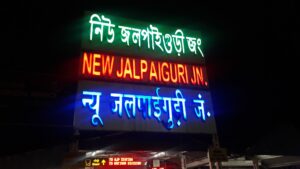
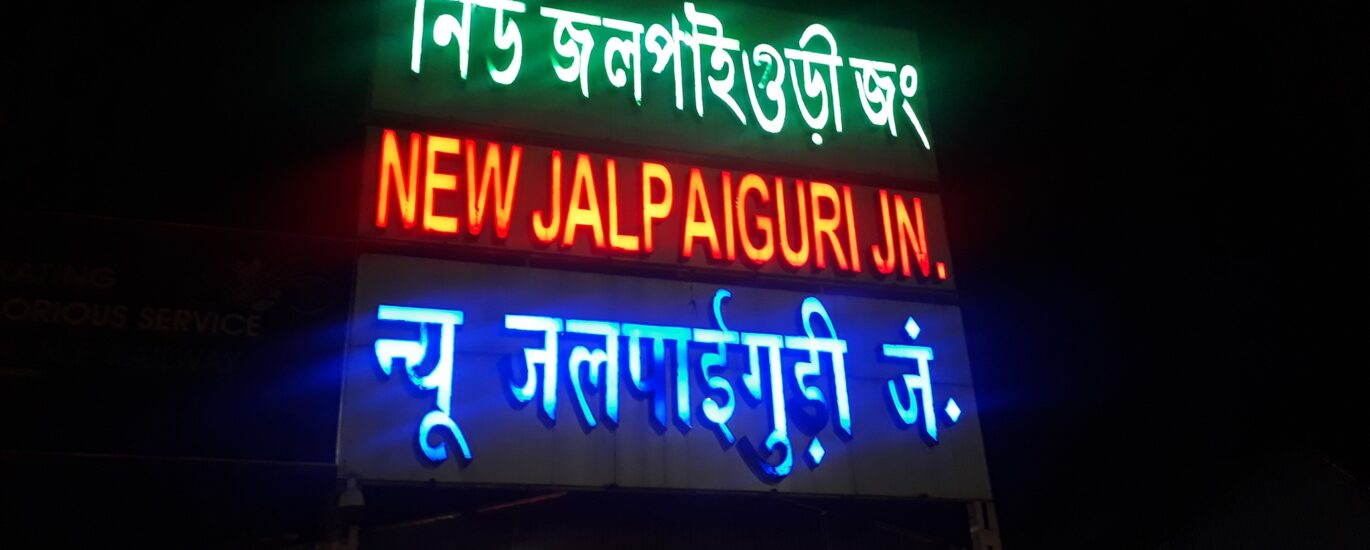
📍 New Jalpaiguri (NJP) Railway Station — the starting point of your Gangtok journey
Why NJP Is the Gateway Everyone Uses
New Jalpaiguri is not just a railway station — it is the single most important transit hub for anyone heading into Sikkim from the rest of India. NJP is at a distance of 124 km from Gangtok, and most tourists avail trains and get off here to reach Gangtok. Trains from major Indian cities like Kolkata, Delhi, Mumbai, and Bangalore all stop at NJP, making it incredibly convenient for travelers from across the country.
Since Gangtok does not have any railway station, you must travel by road from NJP. This is important to understand before you plan. No matter how close you think Gangtok looks on a map, the road is the only way up. And honestly? That road is one of the most beautiful drives you’ll ever take in India.
The station at NJP is large, well-organized, and used to handling large tourist crowds. Outside the main exit, you’ll find pre-paid taxi counters, shared cab drivers calling out destinations, and travel agents who can arrange the rest of your Sikkim trip. It’s busier than you expect, but once you know where to go, it’s very straightforward.
What the Road from NJP to Gangtok Actually Looks Like
Before you worry about fares and options, let’s talk about the road itself — because this journey is genuinely remarkable. The drive from NJP to Gangtok is breathtaking, with winding mountain roads, views of the Teesta River, and lush greenery all around. En route, you’ll pass through towns like Rangpo (the Sikkim entry point) and Singtam.
For the first 30 to 40 kilometers, you’re still in the plains of West Bengal. The road passes through Siliguri’s busy town traffic before opening up near Sevoke, where you cross the famous Coronation Bridge over the Teesta River and the mountains begin. From here, the landscape changes completely — every curve of the road reveals a new frame-worthy view.
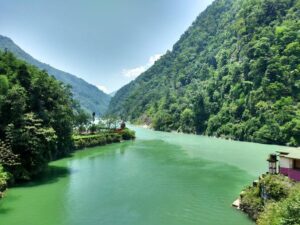
🌊 The Teesta River runs alongside the road for much of the journey — one of the most scenic stretches in India
The main route most travelers use is the one via NH10 (formerly NH31A), which follows the Teesta River almost the entire way. Via Sevoke road, NJP to Gangtok distance is 125 km. The route will take you through the bank of river Teesta with beautiful views of mountains and rivers.
There is also an alternative route via Hill Cart Road through Kurseong. This route starts from Sevoke town near Siliguri and passes through Kalijhora, Kurseong, Sonada, and Jorethang before reaching Gangtok. It is longer but offers its own scenic rewards. Most shared taxis and regular cabs will take the NH10 route since it is faster.
The Route Milestone by Milestone
All the Ways to Reach Gangtok from NJP (With Honest Pros and Cons)
There are three main ways to make this journey — shared taxi, private cab, and bus. Each has its place depending on your budget, comfort level, and travel schedule. Here’s a clear breakdown of each option.
🚐 Shared Taxi / Shared Jeep
This is the most popular option for solo travelers, backpackers, and those on a budget. Shared taxis (typically Tata Sumos or Mahindra Boleros seating 10 passengers) operate on fixed routes. Fares are charged per seat.
The best time to get a shared taxi is between 7:00 AM and 11:00 AM. Vehicles fill up fast, and you won’t have to wait long for the cab to depart. Shared taxis to Sikkim become very scarce after 3:30 PM.
The vehicle is packed — typically 10 people including the front seat. Your luggage goes on the roof rack. If you want more space, especially on the winding mountain roads, it is very common to pay for two seats for yourself. That extra ₹300–450 buys you real comfort on those curves.
Best for: Solo travelers, budget-conscious tourists, and those comfortable with a cozy mountain ride.
🚗 Private Cab (Full Cab Hire)
Booking a full private cab means the vehicle is yours alone. At NJP, plenty of private taxis are available, and it takes about 4.5 hours to reach Gangtok. There is a pre-paid taxi counter outside the NJP station which opens at around 7 AM.
Private cabs offer flexibility — you can stop at viewpoints, take photographs at the Teesta, or take a longer lunch break. The fare can vary during peak seasons such as summer (March–May) and winter holidays (December–January).
For families with luggage or anyone with elderly members or young children, private cabs are almost always worth the extra cost. SUVs are the most preferred option in winter because of their stability and space.
Best for: Families, couples, groups of 3–4, or anyone who wants a relaxed and flexible journey.
🚌 Bus Service (SNT State Bus)
You cannot get buses directly from New Jalpaiguri. From NJP you can take an auto rickshaw and reach the bus terminus in Siliguri in about 10–15 minutes. From Siliguri SNT bus terminal, there are daily bus services to Gangtok at an interval of 1 hour starting at 8:30 AM until 1:30 PM. The last bus leaves for Gangtok at 3:30 PM.
Buses are the most economical way to travel and are a good option if you don’t mind the extra step of reaching Siliguri first. They are comfortable enough for the journey though slower than a taxi. There are also many private buses available from SNT.
Best for: Very budget-conscious travelers, those who like the experience of public transport, or travelers without heavy luggage.
- Shared Taxi (per person): ₹300–450 (off season) | ₹450–600 (peak season)
- Private Hatchback cab (full): ₹2,800–3,500
- Private SUV (Innova/Crysta): ₹4,000–4,500
- SNT Bus (from Siliguri, non-AC): ~₹150 per person
- Note: While returning from Gangtok to NJP, expect the return fare to be higher than the forward fare as the taxi has to often go back empty.
The Sikkim Permit System — What You Actually Need
Sikkim is a protected state and has some entry formalities that you must know about before you arrive. Missing these can cause delays or denied entry at checkposts.
🛂 Permit Requirements for Entering Sikkim
- Indian Nationals: A valid government-issued photo ID (Aadhaar, voter ID, or passport) is sufficient to enter Gangtok and most of East Sikkim. No separate permit is needed for the basic Gangtok area.
- For Nathula Pass and Tsomgo Lake: Permits are required to visit certain areas near Gangtok such as Nathula Pass and Tsomgo Lake due to their proximity to the international border with China. These permits can be obtained through a registered tour operator or through the Sikkim Tourism Office.
- For North Sikkim: Indian nationals need Inner Line Permits for North Sikkim and Nathula Pass. Foreign nationals need Protected Area Permits issued through registered agents. Carry valid ID and two passport-size photos for army checkpoints.
- Foreign Nationals: Need a Protected Area Permit (PAP) which is arranged through a registered travel agent in Gangtok.
- Entry Check at Rangpo: Carry valid ID proof, as you may need to show it at border checkposts when entering Sikkim.
Within Sikkim, taxis are fully union-regulated. Each district — East (Gangtok), North (Mangan), South (Namchi), and West (Geyzing) — has its own membership, permits, and fare structure. Fares are fixed by the union; negotiation is rarely possible. This is actually a good thing — it means prices are transparent and you won’t get ripped off.
The Best Places to Explore Once You Reach Gangtok
After the journey from NJP, Gangtok will greet you with cool mountain air, prayer flags swaying in the breeze, and views of Kanchenjunga on clear days. This city is far more than just a transit point to North Sikkim — it has enough to keep you busy and happy for several days.

🚶 MG Marg — Gangtok’s famous car-free pedestrian street, the heart of the city
MG Marg — The Soul of Gangtok
MG Marg is the busiest street in Gangtok, and everyone loves to visit here. No cars are allowed on this road, so you can walk safely. The street is very clean and has many shops, cafes, and restaurants. It’s the best place to buy things and try local food.
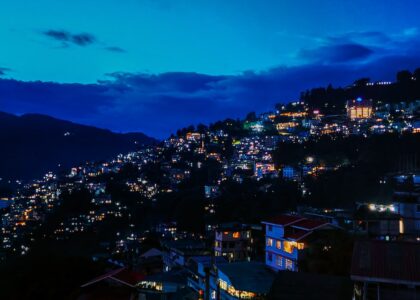
Spend your first evening here. Grab momos from a street stall, pick up Sikkim handicrafts, and sit at a rooftop café as the city lights come on across the hillside. This is where the social life of Gangtok happens.
Tsomgo Lake (Changu Lake)
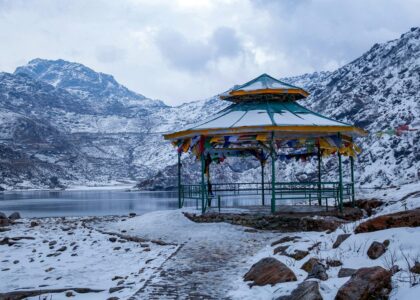
Tsomgo Lake is one of the most beautiful places to visit in Sikkim. This lake is very high up in the mountains — 12,000 feet above sea level! The water looks like a mirror and changes colours during the day. Sometimes it’s blue, sometimes green. In winter, the lake freezes over.
According to myth, the spiritual gurus of Sikkim used to study the colour of the water of Tsomgo Lake to forecast the future of the state. The local people consider the lake as sacred. It is about 40 km from Gangtok. A permit is required to visit.
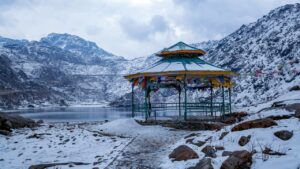
🏔️ Tsomgo Lake (Changu Lake) — the sacred glacial lake sits at 12,000 feet above sea level
Nathula Pass — The Indo-China Border
Situated at an altitude of 14,450 feet in the Himalayas, Nathula Pass is located 54 km from Gangtok. It is one of the three open trading border posts between India and China. The pass is located on the Old Silk Route, through which trade between India and Tibet used to operate until 1962.
Timings are 8 AM to 3 PM. The pass remains closed on Mondays and Tuesdays. The best time to visit Nathula Pass is from May to October. The drive up is dramatic and the views are otherworldly. Permits required — book through a local travel agent in Gangtok.
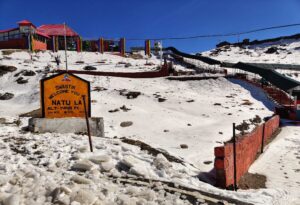
🏔️ Nathula Pass — standing at 14,450 feet on the India-China border, once part of the ancient Silk Route
Rumtek Monastery
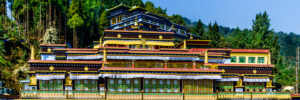
is one of the top attractions in Gangtok. It is one of the most important Buddhist monasteries outside Tibet. About 24 km from Gangtok city, this is a must-visit for anyone interested in Tibetan Buddhist culture, architecture, and atmosphere. Monks go about their daily rituals here, and the monastery houses priceless religious artifacts. The road to Rumtek is also beautiful.
Hanuman Tok & Tashi Viewpoint
Hanuman Tok is a temple for Lord Hanuman built on a high hill. From here, you can see Mount Kanchenjunga and other big mountains very clearly. It’s a quiet place where you can pray and enjoy nature together. Tashi Viewpoint, also nearby, is one of the best sunrise spots in all of Sikkim. If clear skies cooperate, Kanchenjunga appears blazing in orange and gold at dawn.
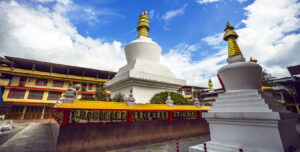
One of the most popular attractions to visit in Gangtok is the stupa, which is surrounded by 108 prayer wheels. If you’re looking for peace, this is the spot to go. Spinning all 108 prayer wheels as you walk the circumference is a deeply calming experience. This is one of the most important stupas in Sikkim and is especially beautiful in the early morning mist.
Planning Your Trip Around Gangtok’s Seasons
Gangtok is a year-round destination but the experience changes dramatically with the seasons. The best time to visit Gangtok is from March to June and September to December. The weather is nice during these months, and you can see the mountains clearly. Here’s what each season offers.
Spring (Mar–May)
Rhododendrons in bloom, clear mountain views, pleasant temperatures. Best season for photography. Peak tourist time — book in advance.
Summer (Jun)
Warm and comfortable in the city. Monsoon begins late June. Green landscapes start appearing. Good for budget travelers as prices are slightly lower.
Monsoon (Jul–Sep)
Landslides can affect road travel during the monsoon (June to September), so plan accordingly. Lush valleys but roads can be unpredictable. Not ideal for first-time visitors.
Winter (Oct–Feb)
For the adventurous winter lover, nearby Nathula Pass and Tsomgo Lake remain covered with snow, offering ideal shoots for photography lovers. October–November sees the best mountain clarity of the year.
What to Eat in Gangtok — The Food Lover’s Corner
Gangtok’s food scene is one of its most underrated highlights. The city brings together Sikkimese, Tibetan, Nepali, and Indian flavors in a way that will genuinely surprise you. Eat on MG Marg, explore the local restaurants around Lal Bazaar, and always say yes to momos.
Where to Stay in Gangtok — Honest Hotel Picks for Every Budget
Gangtok has a great range of accommodation — from budget guesthouses with incredible views to boutique heritage properties with Kanchenjunga visible from your window. Most quality hotels are located close to MG Marg or on the ridge above the city, making it easy to explore on foot. You can find a variety of accommodation options near MG Marg, ranging from budget-friendly guesthouses to more luxurious accommodations. The central location ensures you’re never too far from restaurants, cafes, and shops.
₹800 – ₹1,800/night
Clean guesthouses and homestays near Lal Bazaar. Basic but warm hospitality. Many offer mountain views at great prices. Perfect for backpackers.
₹2,000 – ₹4,500/night
Well-equipped hotels with hot water, attached bathrooms, Wi-Fi, and often a restaurant. Great options close to MG Marg with comfortable rooms.
₹5,000 – ₹15,000+/night
Premium properties with panoramic Himalayan views, spa services, fine dining, and attentive service. Worth splurging for special occasions.
- Always confirm your hotel’s exact location before booking — “Gangtok” covers a wide area and some “Gangtok” hotels are actually 5–8 km from the city center.
- Book accommodation well in advance during April–May and October–November — these months see extremely high occupancy rates.
- Always ask whether mountain views (Kanchenjunga) are visible from the property — this is worth requesting specifically.
- Most budget hotels include complimentary breakfast. Confirm this at booking as it can save you both money and morning hassle.
Smart Packing for the NJP to Gangtok Journey
What you carry matters as much as where you stay. Gangtok’s weather can shift quickly — warm afternoons and cold nights are the norm across most of the year. If you’re heading to high-altitude spots like Nathula or Tsomgo, the cold is real and not to be underestimated.
Important Things Nobody Tells You Before Your First Visit
After years of covering this route and speaking with real travelers, here are the practical insights that rarely make it into the glossy brochures — things that actually make your trip smoother.
On the Journey Itself
Luggage space is limited in shared Sumos which pack 10 passengers. Large trolley bags are tied to the roof carrier. Carry a small daypack for your valuables to keep on your lap. If you have a large suitcase, the roof rack works fine but wrap it in a plastic bag or cover during monsoon season.
People will be hopping on and off the shared jeep along the way as many locals travel for shorter distances. Don’t be confused if the cab stops frequently in the first 40 km — it’s totally normal.
On Reaching Gangtok
All shared taxis operating to Gangtok can only come up to Deorali, which is about 2 km below the Gangtok town center. From Deorali, you’ll need a short local cab or auto to reach your hotel. Most hotel staff will tell you this in advance if you call ahead.
On the Sikkim Taxi System
Gangtok operates on sightseeing circuits — 5 Point, 7 Point, and 10 Point — covering Tashi Viewpoint, Ganesh Tok, and Rumtek Monastery. Rates are fixed per circuit, not per km, ensuring transparency for guests. This is a very honest system — you pay a flat rate for each sightseeing route and there’s no haggling involved.
Outside vehicles cannot conduct local sightseeing. If you came in a West Bengal cab, that driver cannot legally take you around Gangtok for local sightseeing. You’ll need to book a Sikkim-registered local taxi for city tours and day trips.
On Altitude and Health
Gangtok itself at 5,410 feet is fine for most people and altitude sickness is rarely a concern in the city. However, when you climb to Tsomgo Lake (12,000 ft) or Nathula Pass (14,450 ft), the altitude increase is significant and rapid. Go slowly, drink water, avoid alcohol the previous night, and if you feel dizzy or develop a severe headache, descend immediately rather than pushing through.
Connectivity, Network, and Staying in Touch
A common concern for first-time visitors to Sikkim is mobile network coverage. The situation has improved but still has its quirks. BSNL has traditionally been the most reliable network across Sikkim, including remote areas. Airtel and Jio work well in Gangtok city and most major tourist areas, but signal can disappear on mountain passes and remote routes.
Most hotels in Gangtok offer Wi-Fi, though speeds vary. For navigation, download Google Maps offline for the Gangtok area and the Teesta route before you leave NJP — this is practical insurance for mountain roads where connectivity drops suddenly.
Ready to Make This Journey?
The road from NJP to Gangtok is more than a transfer — it’s the official beginning of your Sikkim adventure. Plan ahead, book your cab early during peak season, keep your ID ready at the checkpost, and keep your camera within reach from the moment you cross Sevoke Bridge. The mountains are waiting.