How to Plan a Perfect Sikkim Trip
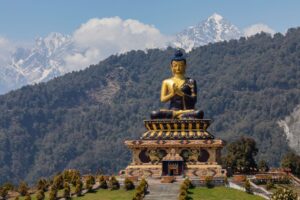
Sikkim is one of those rare places that stays with you long after you’ve left. The mountains, the silence, the kindness of people — it all adds up to something you can’t really describe. You just have to go.
I have visited Sikkim four times — once solo as a backpacker, twice with family, and once on a quick weekend with friends from Kolkata. Every single trip has been different. Every single trip has been worth it.
But here’s the truth nobody tells you before your first Sikkim trip: planning matters a lot here. Unlike Goa or Manali, Sikkim has restricted areas that need permits, mountain roads that close without warning, and weather that changes every few hours. If you walk in unprepared, you’ll waste precious days sorting out things that could have been done from home.
This blog is everything I wish I had before my first trip. I’ve kept it simple, honest, and practical — no unnecessary fluff, just what you actually need to know.
01 — Why Sikkim
Why Sikkim Deserves a Spot on Your Travel List Right Now
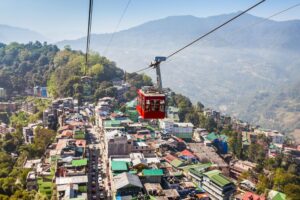
India has hundreds of beautiful hill stations and mountain destinations. So what makes Sikkim stand out? Let me give you a few honest reasons.
It’s still relatively untouched. Sikkim gets far fewer tourists than Himachal Pradesh or Uttarakhand. That means cleaner roads, less commercialisation, and experiences that still feel authentic. The monasteries here aren’t overrun with selfie sticks. The lakes still look like they belong to another world.
The biodiversity is genuinely stunning. Sikkim is home to over 600 types of orchids and more than 4,000 plant species. It was India’s first fully organic state. When you’re walking through forests here, you feel it — the air smells different, the colours look brighter.
The culture is layered and real. This is a Buddhist-majority state with strong Nepali and Tibetan influences. The festivals, the prayer flags, the ancient monasteries — they’re not tourist setups. They’re living traditions that locals deeply care about.
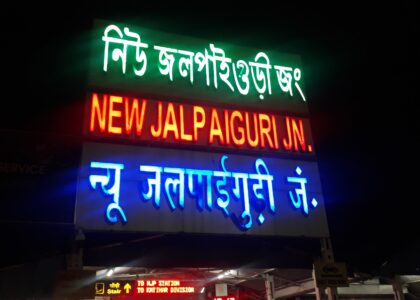
It’s accessible from major cities in eastern India. If you’re based in Kolkata, you can reach Bagdogra airport or New Jalpaiguri (NJP) station in under 2 hours by flight, and then drive up to Gangtok in about 4.5 hours. It’s genuinely one of the easiest Himalayan destinations to reach.
“Sikkim is not just a destination. It’s the kind of place where the mountains make you feel small in the best possible way — and that feeling changes you a little.”
Choosing the Right Time — Because Timing Changes Everything in Sikkim
This is genuinely one of the most important decisions you’ll make. Sikkim’s weather varies dramatically by altitude, region, and season. Here’s a clear breakdown of all four seasons so you can match your trip to your interests.
Spring
Best time for rhododendrons and wildflowers. Mild temperatures, great mountain views. One of the most recommended times to visit.
Monsoon
Heavy rainfall and frequent landslides. North Sikkim roads often close. Best avoided for mountain access, but lush and green.
Autumn
Crystal-clear skies after monsoon. Best mountain views of the year. Perfect for photography and high-altitude trekking.
Winter
Snow at higher altitudes. North Sikkim may be inaccessible. But Gangtok and Pelling are beautiful and less crowded.
For first-time visitors, October–November is the sweet spot — clear mountain views, comfortable temperatures, open roads, and the Pang Lhabsol festival in late October which is visually breathtaking. For budget travellers, March–April offers similar conditions at slightly lower hotel rates.
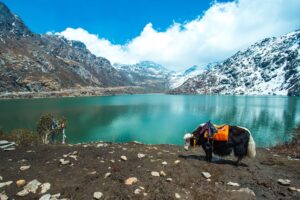
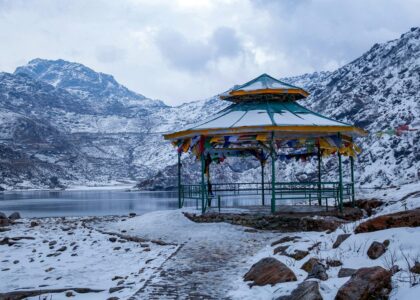
Tsomgo (Changu) Lake — one of the most visited high-altitude lakes in Sikkim, located at 12,310 feet
Permits You Absolutely Need Before Entering Sikkim
This is the section most travel blogs skip or confuse. Let me explain it clearly. Sikkim has two distinct types of permit requirements depending on where you want to go.
ILP — Inner Line Permit
Required for all Indian nationals entering Sikkim. You can get this at the Rangpo checkpost (entry point from West Bengal) or at district offices in Gangtok. It’s free and takes about 20–30 minutes. Keep multiple photocopies.
PAP — Protected Area Permit
Required for foreign nationals and also for certain restricted zones like Nathula Pass. Foreign visitors must apply through a registered travel agency. PAP takes 2–4 days to process, so plan in advance.
North Sikkim Permit
Additional permit for visiting Lachen, Lachung, Gurudongmar Lake, and Yumthang Valley. Indian citizens can get this through local tour operators in Gangtok. Valid for specific dates and requires a registered vehicle.
Nathula Permit
A separate permit for visiting the India-China border at Nathula Pass. Available from the SNT stand in Gangtok. Check in advance — it’s often closed on Mondays, Tuesdays, and government holidays.
My honest advice: book your permits and vehicles together through a reliable Gangtok-based tour operator at least a week before your trip. This ensures everything lines up on the right dates without any last-minute scramble.
The Places That Will Actually Stay With You After You Come Back
Sikkim is divided into four districts: East, West, North, and South. Each has its own character. Here are the places that genuinely deserve your time.
East Sikkim — Where Most Trips Begin
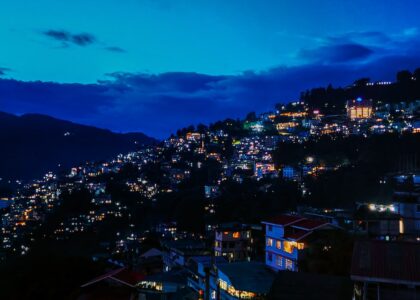
Gangtok is the capital and entry point for most tourists. It’s a well-organised, clean, and surprisingly cosmopolitan hill town. Don’t rush through it. Walk along MG Marg in the evening, visit Enchey Monastery early in the morning, and spend a couple of hours at the Namgyal Institute of Tibetology.
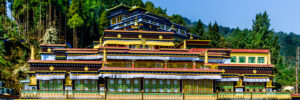
Rumtek Monastery is about 24 km from Gangtok and is one of the most significant Kagyu monasteries outside Tibet. It’s architecturally stunning, spiritually important, and much more peaceful than the monastery-heavy tourist trails of Dharamsala. Try to visit during prayer hours (usually 6 AM and 6 PM).
Tsomgo Lake (Changu Lake) is a glacial lake at 12,310 feet, just 40 km from Gangtok. The drive there is half the experience. The lake itself changes colour with the seasons — greenish-blue in summer, frozen and white in winter. Yaks roam nearby and local vendors sell Tibetan tea. It’s touristy but still beautiful.
Nathula Pass, at 14,200 feet, is one of the few operational trading posts on the India-China border. You need a separate permit and can only go with a registered vehicle. It’s more of a “I stood at the border” experience than a scenic one, but for most first-time visitors, it’s memorable.
North Sikkim — For Those Who Want the Untouched Himalayas
This is the most dramatic part of Sikkim. Yumthang Valley, called the Valley of Flowers, is at nearly 12,000 feet and is blanketed with rhododendrons in spring. The road to get there winds through pine forests and river valleys — genuinely one of the best drives in northeast India.
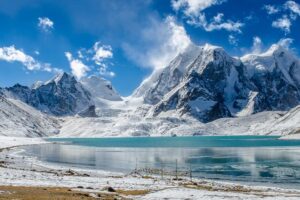
Gurudongmar Lake — one of the highest lakes in the world at 17,800 feet, held sacred by Sikhs and Buddhists alike
Gurudongmar Lake at 17,800 feet is one of the highest lakes in the world and is considered sacred in both Sikh and Buddhist traditions. The drive is long and altitude sickness is a real concern — acclimatise properly in Lachung before attempting it. When you get there, the silence and the scale of the landscape are unlike anything else in India.
West Sikkim — Mountains, Monasteries, and a Glass Skywalk
Pelling is the base town for West Sikkim and offers arguably the best views of the Kangchenjunga range on clear mornings. The Pemayangtse Monastery here is one of the oldest in Sikkim and houses a stunning seven-tiered wooden model of the heavenly palace of Guru Rinpoche.
The glass skywalk near Rabdentse ruins was opened in recent years and quickly became popular — it’s a 100-foot bridge with a glass floor suspended over a valley. Not for the faint-hearted, but genuinely exciting for everyone else.
South Sikkim — Quiet, Organic, and Often Overlooked
Ravangla is a quiet town at about 7,000 feet with great views and the beautiful Ralong Monastery nearby. Namchi has the giant statues of Guru Padmasambhava and Lord Shiva, which are pilgrimage sites but also interesting as architectural landmarks. South Sikkim is far less crowded than the east and north — if you like slower, quieter travel, add it to your itinerary.
A 7-Day Sikkim Itinerary That Actually Works in the Real World
This is a realistic itinerary that balances the major highlights with enough breathing room to actually enjoy each place. Long mountain drives are tiring — don’t overpack your days.
-
Day1
Arrive at NJP / Bagdogra → Gangtok
Drive up to Gangtok (4–5 hours). Check in, walk MG Marg in the evening. Get your ILP sorted if not done already. Light dinner — try momos and thukpa.
-
Day2
Gangtok Local Sightseeing
Namgyal Institute, Enchey Monastery, Sikkim State Museum, Cable Car ride. Evening at MG Marg food street. Rest well — mountain drives ahead.
-
Day3
Tsomgo Lake + Nathula Pass (Permit Required)
Early start (6 AM). Tsomgo Lake by 8 AM, Nathula by 10 AM, back to Gangtok by 4 PM. The altitude can be demanding — carry warm clothes and light snacks.
-
Day4
Gangtok → Lachung (North Sikkim)
5-hour drive through stunning river valleys. Check in early, explore the small town, try local food. Sleep early — altitude acclimatisation is important.
-
Day5
Yumthang Valley + Zero Point (Optional)
Early morning drive to Yumthang. If well acclimatised, continue to Zero Point (15,300 ft). Return to Lachung by evening. One of the most scenic days of the trip.
-
Day6
Lachung → Gangtok → Pelling
Drive back to Gangtok, brief stop, then continue to Pelling (West Sikkim, 3–4 hrs). Check in at a hotel with mountain views. Sunrise over Kangchenjunga tomorrow morning.
-
Day7
Pelling Sightseeing → Departure
Pemayangtse Monastery, Rabdentse Ruins, Glass Skywalk. Head to NJP or Bagdogra for departure. If time allows, stop at Kecheopalri Lake — a sacred wish-fulfilling lake that is genuinely beautiful.
How to Reach Sikkim Without Any Last-Minute Surprises
Sikkim does not have its own airport or railway station. This surprises a lot of first-time visitors. Here’s how to reach it from major cities.
By Air
Bagdogra Airport (IXB) near Siliguri is the closest airport, about 124 km from Gangtok. It’s well-connected to Delhi, Mumbai, Kolkata, Hyderabad, and Chennai. From Bagdogra, you take a shared cab or private taxi to Gangtok. The drive takes 4–5 hours depending on traffic and road conditions.
Pakyong Airport in Sikkim itself opened in 2018 but operates limited flights. Check current schedules before booking — it’s closer to Gangtok (30 km) but not always reliable.
By Train
New Jalpaiguri (NJP) is the closest major railway station, well-connected to most Indian cities. From NJP, shared taxis run regularly to Gangtok and take about 4.5–5 hours. Book your cab from the pre-paid taxi counter at NJP for a fixed rate.
By Road
If you’re coming from Kolkata, you can take the NH10 or hire a private car from Siliguri. The road passes through Teesta Valley, which is scenic but can be slow due to trucks and landslides during monsoon. Give yourself at least 6–7 hours from Siliguri by road.
Inside Sikkim, you’ll almost entirely depend on hired taxis and jeeps. There’s no Ola or Uber. Fix the price before you get in. For North Sikkim in particular, you must hire a registered local vehicle — your Gangtok taxi cannot take you into restricted zones. Tour operators handle this automatically if you book a package.
What to Eat in Sikkim — and Why the Food Here Is Genuinely Special

Food in Sikkim is a reflection of its culture — it’s a mix of Tibetan, Nepali, and Lepcha influences, and it’s warming, hearty, and delicious. If you come here and eat only at hotel restaurants, you’re missing a big part of the experience.
Momos are everywhere and they’re outstanding. Try the steamed pork or vegetable versions from small roadside stalls — they’re much better than what you’ll find in five-star restaurants. Thukpa (noodle soup with vegetables or meat) is perfect for cold mountain evenings.
Sel Roti is a traditional Nepali ring-shaped bread made from rice flour. Locals eat it for breakfast and during festivals. Sweet, slightly crispy, and best with a cup of butter tea or local curd. Find it at morning markets in Gangtok.
Gundruk is a fermented leafy vegetable dish that is central to Sikkimese and Nepali home cooking. It has a strong, earthy flavour that takes getting used to, but try it at least once in a local restaurant.
Chhurpi is a hard yak cheese that locals chew like a snack. You’ll find it sold in small bags everywhere. It lasts for hours in your mouth — locals say it’s good for the teeth.
For sit-down meals, Gangtok’s MG Marg area has several good options ranging from Tibetan to Indian to even Continental. Local restaurant picks I’d recommend: Nimtho Restaurant for Sikkimese cuisine and The Baker’s Cafe for good breakfast and coffee.
Things to Know Before You Land in Sikkim
These are the practical details that the glossy travel brochures don’t mention, but that make a real difference to your trip.
-
Carry cash. ATMs exist in Gangtok but are scarce in North and West Sikkim. Withdraw enough cash before heading to remote areas. Most guesthouses and local restaurants don’t accept cards or UPI.
-
Acclimatise properly. If you’re going to North Sikkim or any destination above 10,000 feet, spend at least one full day at a mid-altitude location (Gangtok at 5,500 ft) before going higher. Altitude sickness is real and can ruin your trip.
-
BSNL SIM works best. Jio and Airtel have spotty coverage in remote areas. If you have a BSNL connection, keep it active during your Sikkim trip — it has the best network coverage in the hills.
-
Dress in layers. Even in summer, temperatures drop sharply after sunset. Carry a fleece or light down jacket regardless of when you visit. For winter or high-altitude zones, thermal innerwear is essential.
-
Respect monastery rules. Remove shoes before entering. Ask permission before photographing monks or rituals. Dress modestly (no shorts or sleeveless tops at monasteries). These rules are not enforced aggressively, but follow them out of genuine respect.
-
Plastic is banned. Sikkim has a strict ban on plastic bags and carries heavy fines. Carry your own reusable bag and a refillable water bottle. Most hotels provide filtered water — use it.
-
Don’t skip travel insurance. Mountain roads, altitude changes, and occasional road closures mean your trip timeline can shift. A basic travel insurance policy covering medical emergencies and trip cancellation is well worth it in Sikkim.
-
Book hotels in advance for peak season. October and April-May are the busiest months. Good hotels in Pelling and Lachung fill up weeks in advance. Don’t leave accommodation to chance.
Ready to Book Your Sikkim Trip?
Sikkim is one of those destinations that rewards you more the better you plan. Book early, get your permits sorted, and give yourself at least 7 days to see it properly. Trust me — you’ll wish you had more time.
Some Honest Closing Words From Someone Who Keeps Going Back
Sikkim is not the kind of place that tries to impress you. It doesn’t have a Disneyland-style tourist circuit. There’s no Eiffel Tower moment. What it has is something quieter and harder to put into words.
It has mornings where the Kangchenjunga turns gold at sunrise and you forget what you were worried about back home. It has tiny monasteries where the butter lamps have been burning for centuries. It has hot bowls of thukpa on cold mountain nights. It has roads that wind through forests and suddenly open up into valleys that make you feel like you’re the first person who ever saw them.
Plan well. Go with an open schedule. Say yes to the extra walk. Talk to your driver — they often know the best local spots that no travel blog covers.
And when you come back (because you will come back), you’ll already be planning the next one.
“The best Sikkim trip is not the one perfectly planned down to every minute. It’s the one where you left just enough room for the mountains to surprise you.”