
The Ultimate Meghalaya Tour Guide
Journey into the Abode of Clouds — where living bridges thread through ancient forests, rivers run crystal clear, and every hillside holds a new wonder.
Meghalaya became a full-fledged Indian state on 21 January 1972, carved out of Assam. Its capital, Shillong, is fondly called the “Scotland of the East” — a charming city of rolling hills, pine forests, and colonial-era architecture set at an elevation of about 1,500 metres.
The state is home to three major tribal communities: the Khasi, Jaintia, and Garo — each with distinct traditions, matrilineal social structures, music festivals, and culinary traditions that give Meghalaya a unique cultural depth unlike any other Indian state.
Why Meghalaya Should Be on Every Traveler’s Bucket List
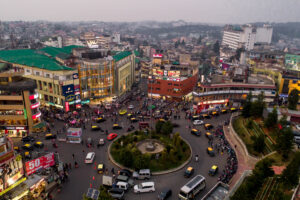
Meghalaya receives more rainfall than almost anywhere on the planet — Mawsynram holds the record for the world’s highest average annual rainfall. Yet that same rain sculpts some of the most spectacular landscapes imaginable: deep gorges, double-decker living root bridges, glowing caves, and rivers so clear you can see every stone at the bottom. The contrast of serene beauty and raw natural power makes Meghalaya truly unforgettable.
- Living root bridges found nowhere else on Earth
- Dawki River — crystal waters so clear boats appear to float on air
- Cherrapunji — the wettest region on the planet with epic waterfalls
- Mawlynnong — Asia’s cleanest village
- Rich Khasi, Jaintia, and Garo tribal cultures
- Spectacular caving, trekking, and adventure sports
Must-See Destinations
Top Places to Visit in Meghalaya
From the misty heights of Shillong to the translucent waters of Dawki, here are the destinations that define a Meghalaya tour.
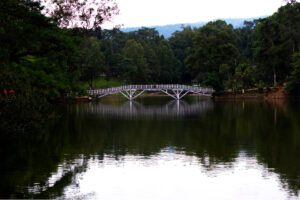
Shillong – Scotland of the East
The vibrant capital city blends colonial charm with modern energy. Visit Ward’s Lake, Elephant Falls, Police Bazar, and Shillong Peak for panoramic views of the entire valley.
Capital City
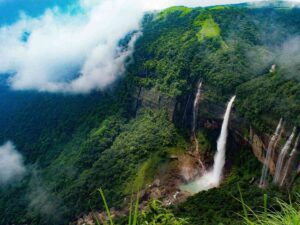
Cherrapunji – Land of Clouds & Waterfalls
Home to Nohkalikai Falls (India’s tallest plunge waterfall), Mawsmai Cave, Seven Sisters Falls, and the famous Eco Park. Cherrapunji is the soul of Meghalaya tourism.
Waterfalls
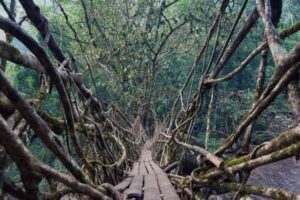
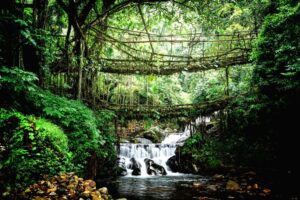
Living Root Bridges – Nongriat Village
Grown over 500+ years by the Khasi people who trained rubber tree roots across streams, these bio-engineered bridges are UNESCO-nominated and utterly mesmerizing. The double-decker bridge is a photographer’s dream.
Natural Wonder
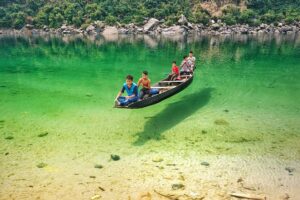
Dawki – The Crystal River
The Umngot River at Dawki is so extraordinarily clear that boats appear to float in mid-air. Located near the Bangladesh border, it’s one of the most photographed rivers in India. Best visited October–March.
River · Border Town
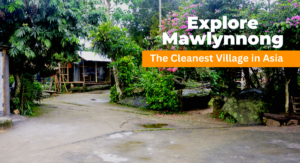
Mawlynnong – Asia’s Cleanest Village
Declared Asia’s cleanest village by Discover India magazine, Mawlynnong is a model of eco-living. Stroll flower-lined paths, climb the bamboo sky walk, and spot Bangladesh’s plains on a clear day.
Eco Village
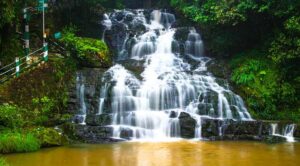
Elephant Falls, Shillong
Just 12 km from Shillong city, this three-tiered waterfall cascades through lush forest in a series of dramatic drops. Originally named by the British after a rock shaped like an elephant (later destroyed in an earthquake).
Waterfall
“Meghalaya doesn’t reveal itself all at once. It opens like a flower — each turn in the road, each lifting cloud, a slow and generous gift.”— Northeast India Travel Journal
Plan Your Journey
Meghalaya 6-Day Tour Itinerary
Arrive in Shillong – Settle & Explore
Fly into Guwahati (closest major airport), then transfer to Shillong (3 hrs by road). Check in, explore Police Bazar, and enjoy your first taste of Meghalayan cuisine — try Jadoh (rice with pork) for dinner.
Shillong City Tour – Lakes, Falls & Peaks
Visit Ward’s Lake, Elephant Falls, Shillong Peak (highest point in the city with panoramic views), Lady Hydari Park, and Don Bosco Centre for Indigenous Cultures museum. Evening stroll at Bara Bazar.
Cherrapunji – Waterfalls, Caves & Viewpoints
Drive to Cherrapunji (Sohra). Visit Nohkalikai Falls, Seven Sisters Falls, Mawsmai Cave, Eco Park, and the Bangladesh border viewpoint. Spend the night in Cherrapunji to catch the magical sunrise mist.
Day 4 · Mawlynnong & Dawki
Asia’s Cleanest Village & Crystal River
Drive to Mawlynnong (Asia’s cleanest village) for a morning walk and the sky bridge. Then head to Dawki for an afternoon boat ride on the impossibly clear Umngot River. Stay overnight at Dawki or Shillong.
Day 5 · Mawphlang & Laitlum
Sacred Forest & Canyon Grandeur
Visit the Sacred Mawphlang Forest (guided only, a living open-air museum of Khasi culture). Then drive to Laitlum Canyon — one of Meghalaya’s most spectacular viewpoints, especially at golden hour.
Day 6 · Departure
Last Morning in Shillong – Head Home
Pick up local handicrafts at Bara Bazar (cane & bamboo work, shawls, lokri bags), enjoy a final bowl of Meghalayan rice pudding, then transfer to Guwahati Airport for departure.
When to Go..
Best Time to Visit Meghalaya
Winter
The best time for most visitors. Crystal-clear Dawki river, comfortable temperatures (10–20°C), excellent trekking conditions, and clear skies for panoramic views.
Spring / Pre-Monsoon
Pleasantly warm, forests bloom with orchids and rhododendrons. Good for nature walks and cultural festivals. Humidity begins to rise toward May.
Monsoon
Waterfalls are at their most dramatic and thundering. Cherrapunji transforms into a green paradise. Roads can flood — best for experienced adventurers who don’t mind rain.
💡 Pro Tip
For the ideal Meghalaya experience — combining the crystal Dawki river, dry trekking trails for root bridges, and clear viewpoints — visit between November and January. Book accommodations at least 3–4 weeks in advance during this peak period.
Getting There
How to Reach Meghalaya
By Air – Fly into Guwahati or Shillong
The nearest major airport is Lokpriya Gopinath Bordoloi International Airport, Guwahati (GAU), about 100 km from Shillong (~3 hours by road). Guwahati has direct flights from Delhi, Mumbai, Kolkata, Chennai, and Bengaluru. Shillong also has a small domestic airport at Umroi (30 km from the city) with limited flights from Kolkata.
By Train – Nearest Railhead
Meghalaya itself has no active passenger railway. The nearest major railhead is Guwahati Railway Station, well-connected to all major Indian cities. From Guwahati, hire a cab or take a shared taxi to Shillong (3 hrs, ₹200–₹350 per seat in shared cabs).
By Road – From Guwahati to Shillong
National Highway 6 connects Guwahati to Shillong. State-run buses (MSTC), private buses, and shared taxis make the route regularly throughout the day. The drive is scenic, winding through the Brahmaputra plains and into the hills. Private cabs can be hired for ₹1,500–₹2,500 for the one-way trip.
Inner-Line Permit (ILP) — Do You Need One?
As of 2025, Meghalaya does NOT require an Inner-Line Permit for Indian nationals. However, some restricted areas near international borders (like Dawki) may require basic registration. Foreign nationals need to register with the FRRO and carry their passports. Always carry valid photo ID while traveling within Meghalaya.
Before You Go
Essential Meghalaya Travel Tips
Pack for Rain
Even in winter, brief showers can appear suddenly. Always carry a compact umbrella or rain poncho — it’s Meghalaya! Good waterproof trekking shoes are essential.
Mobile Connectivity
BSNL has the widest coverage in remote areas. Private networks (Jio, Airtel) work well in Shillong and Cherrapunji but may drop in valleys and forest zones. Download offline maps before trekking.
Carry Cash
ATMs are plentiful in Shillong but scarce in villages like Mawlynnong and Dawki. Carry sufficient cash (INR) for homestays, local guides, and roadside eats.
Trekking Preparation
The living root bridge trek at Nongriat is demanding — 3,500+ steps on uneven, often slippery stone. Train in advance, start early, and hire a local guide (mandatory in some areas).
Respect Local Culture
Meghalaya is matrilineal. The Khasi, Jaintia, and Garo communities have their own customs. Dress modestly in villages, ask before photographing people, and support local homestays over chain hotels.
Stay Eco-Conscious
No plastic bags in Mawlynnong — the village earned its title through strict cleanliness rules. Dispose of waste responsibly everywhere in Meghalaya. Take nothing but photographs, leave nothing but footprints.
Eat & Celebrate
Meghalaya Food & Cultural Experiences
Must-Try Meghalaya Foods
Meghalayan cuisine is hearty, flavourful, and refreshingly different from mainland Indian cooking. The food is predominantly pork-based among the Khasi and Jaintia communities, while the Garo community also uses bamboo shoots and river fish extensively.

- Jadoh — Red rice cooked with pork, the defining dish of the Khasi people
- Dohkhlieh — A minced pork salad with onions and green chillies
- Tungrymbai — Fermented soybean curry with pork, intense and earthy
- Pumaloi — Steamed rice cooked in a bamboo tube, served at festivals
- Nakham Bitchi — A fish-based soup, popular in Garo Hills
- Kwai — Betel nut with leaf, a cultural custom offered as a gesture of welcome
Cultural Festivals of Meghalaya
Timing your Meghalaya tour around a festival can be transformative. The state bursts into colour, music, and tradition during its many celebrations:
Wangala Festival (October–November)
The great post-harvest festival of the Garo community, featuring 100-drum ensembles, traditional dance, and vibrant ceremonial dress. Held in Tura and surrounding Garo Hills districts — one of the most spectacular cultural events in Northeast India.
Shad Suk Mynsiem (April)
The thanksgiving dance festival of the Khasi people, celebrated in Shillong. Young women in silk robes and men in dhoti perform the graceful, meditative dance as an offering of gratitude to God.
Behdeinkhlam (July)
The most important festival of the Jaintia community in Jowai, featuring elaborate rituals to ward off disease and welcome prosperity. A vivid, deeply spiritual occasion unlike any other.
Plan Your Spend
Meghalaya Tour Budget Guide
Meghalaya is pleasantly affordable by Indian tourism standards, though the cost of reaching the northeast (flights) can add up. Here’s a rough breakdown for a 7-day Meghalaya tour for two people:
Budget Travel (₹1,500–₹2,500/person/day)
Shared taxis between destinations, budget guesthouses and homestays, local dhabas and rice-and-pork meals, self-guided treks. A 7-day trip on a shoestring budget (excluding flights) can cost as little as ₹15,000–₹20,000 per person.
Mid-Range Travel (₹3,000–₹6,000/person/day)
Comfortable guesthouses or 3-star hotels in Shillong, private cab hire for day trips, guided treks and activities, restaurant meals. Expect ₹25,000–₹45,000 per person for a 7-day trip (excluding flights).
Luxury Travel (₹8,000+/person/day)
Premium resorts and heritage stays, private vehicle for the entire trip, curated local experiences and cultural immersions, fine dining. The northeast has a growing number of boutique luxury properties offering extraordinary value compared to more saturated tourism destinations.
Final Word
Start Planning Your Meghalaya Tour Today with Greenhills Tour
Meghalaya remains one of India’s best-kept secrets — a state of jaw-dropping natural beauty, ancient living wonders, warm-hearted people, and food that will genuinely surprise you. Unlike the heavily trodden Himalayan routes, Meghalaya rewards the curious traveler with genuine discovery at every turn.
Whether you’re standing on the edge of Laitlum Canyon as clouds rush through the gorge below, stepping gingerly onto a living root bridge that has grown for five centuries, or simply watching a boat glide silently over the crystalline Umngot River at Dawki — Meghalaya will leave its mark on you in ways you won’t quickly forget.
Use this complete Meghalaya tour guide as your starting point, and build your own adventure. The clouds of Meghalaya are waiting to part for you.
